
Spring and summer bring sunshine, outdoor fun — and unfortunately, more tick bites, bug bites, and skin rashes. While many bites are harmless and improve on their own, some symptoms can signal irritation, allergic reactions, infection, or illness that should not be ignored.
Knowing what’s normal — and what’s not — can help you protect yourself and your family while enjoying the outdoors.
At Virtual Urgent Care (VUC), we help patients quickly evaluate skin concerns from home with compassionate, convenient care and preventive health guidance.
🌿 Common Tick Bites, Bug Bites & Rashes in Spring and Summer
Common outdoor skin concerns include:
- Mosquito bites
- Tick bites
- Spider bites
- Bee or wasp stings
- Poison ivy or contact rashes
- Heat rash or skin irritation
Most cause temporary redness, itching, or swelling and improve within a few days.
The CDC provides guidance on avoiding tick bites and preventing tick-borne illness during warmer months.
🔗 CDC Tick Bite Prevention:
CDC Tick Bite Prevention
✅ What’s Usually Normal?
Many bug bites and mild rashes improve without medical treatment.
Typical symptoms include:
- Mild redness
- Small bumps
- Itching
- Mild swelling
- Temporary irritation
Simple home care may help:
- Wash the area gently
- Apply cool compresses
- Avoid scratching
- Use over-the-counter anti-itch creams if appropriate
⚠️ When Should You Worry?
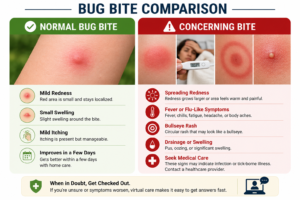
Some symptoms should prompt medical evaluation.
Watch for:
🚩 Spreading Redness or Infection
If redness spreads, becomes painful, warm, swollen, or starts draining pus, infection may be developing.
🚩 Fever or Flu-Like Symptoms
Ticks can carry illnesses that cause fever, fatigue, body aches, or headaches.
🚩 Bullseye Rash After a Tick Bite
A circular “bullseye” rash can sometimes occur after certain tick exposures and should be evaluated promptly.
🚩 Severe Allergic Reactions
Seek immediate in-person medical care for:
- Trouble breathing
- Facial swelling
- Severe dizziness
- Rapid swelling after a sting
The CDC explains symptoms and warning signs to watch for after tick exposure, including skin changes and illness symptoms.
🔗 CDC Tick Bite Symptoms & Care:
CDC Tick Bite Information
👶 Kids and Outdoor Skin Concerns
Children are especially prone to bug bites and outdoor rashes because they spend more time playing outside and may scratch irritated skin.
Parents should monitor:
- Increasing redness
- Worsening swelling
- Fever
- Persistent scratching causing skin breakdown
🩺 When to Use Virtual Urgent Care

Many tick bites, bug bites, and rashes can be evaluated virtually.
VUC providers can help:
- Assess bites or skin irritation
- Determine whether symptoms look concerning
- Recommend treatment options
- Prescribe medication when appropriate
- Provide preventive guidance to help avoid future issues
Learn more about skin concerns and common conditions we evaluate on our What We Treat page:
💻 Preparing for Your Visit
A virtual visit makes it easy to get answers without leaving home — especially for skin concerns.
Be prepared to show you VUC provider your rash or insect bite site during appointment.
New to telehealth? Read our How to Prepare for a Virtual Visit guide before your appointment:
🌟 The Bottom Line
Most bug bites and rashes are harmless — but not all are.
Knowing when symptoms move from “watch and wait” to “time to get checked” can help prevent complications and bring peace of mind.
With VUC, you can get compassionate, convenient care from home — plus preventive guidance to help you stay healthy all season long.
👉 Book your virtual visit today and get answers without the waiting room.