
Summer means more time spent swimming, enjoying the pool, and cooling off at the beach. While these activities are great ways to beat the heat, they can also increase your risk of developing swimmer’s ear, a common outer ear infection.
The good news? Swimmer’s ear is often preventable and, when recognized early, can usually be treated before it becomes more painful.
At Virtual Urgent Care (VUC), we help patients identify and treat common ear conditions while providing preventative health information to help families stay healthy all summer long.
🌊 What Is Swimmer’s Ear?
Swimmer’s ear (also called otitis externa) is an infection of the outer ear canal.
It occurs when moisture becomes trapped inside the ear after swimming or bathing, creating an environment where bacteria or fungi can grow.
Although it’s common among swimmers, anyone can develop swimmer’s ear.
👂 Common Symptoms
Symptoms often begin gradually and may worsen over several days.
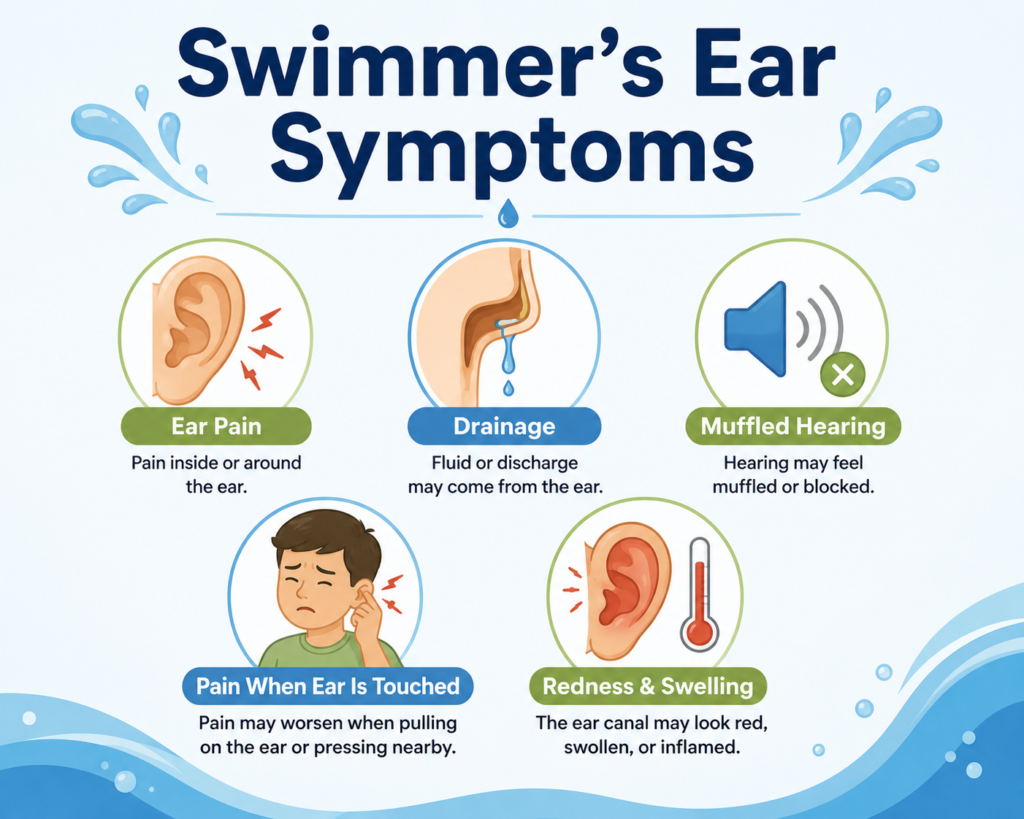
Common symptoms include:
- Ear pain
- Itching inside the ear
- Redness
- Mild swelling
- Pain when pulling on the ear
- Feeling like the ear is plugged
- Drainage from the ear
- Reduced hearing
Children may become irritable or complain that their ear hurts when lying down.
🏊 Why Does It Happen More in Summer?
Swimming pools, lakes, oceans, and water parks all increase moisture inside the ear.
Other risk factors include:
- Frequent swimming
- Humid weather
- Using cotton swabs
- Scratching the ear canal
- Wearing earbuds for long periods after swimming
Tiny breaks in the skin allow germs to enter and cause infection.
✅ How to Prevent Swimmer’s Ear
Fortunately, prevention is simple.
You can lower your risk by:
- Drying your ears after swimming
- Tilting your head to remove trapped water
- Using a towel to dry the outside of the ear
- Avoiding cotton swabs inside the ear canal
- Wearing ear plugs if recommended
- Keeping ears as dry as possible
These small habits can make a big difference during swim season.
The CDC offers additional information about healthy swimming habits that can help reduce the risk of recreational water illnesses.
🚩 When Should You Seek Medical Care?
You should seek medical evaluation if:
- Ear pain is worsening
- Drainage develops
- Hearing becomes reduced
- Symptoms last more than two days
- Fever develops
- Swelling becomes severe
Prompt treatment can help relieve discomfort and prevent complications.
💻 How VUC Can Help
Many cases of swimmer’s ear can be evaluated through a virtual visit.
VUC providers can:
- Review your symptoms
- Determine if swimmer’s ear is likely
- Recommend appropriate treatment
- Prescribe medication when appropriate
- Provide prevention tips to reduce future infections
Our goal isn’t just helping you feel better today—we also provide preventative care information to help you stay healthy all season long.
Learn more about ear infections and other common conditions we evaluate on our What We Treat page.

💡 Preparing for Your Virtual Visit
Before your appointment:
- Write down when symptoms started.
- Avoid putting anything into the ear.
- Note any recent swimming or water activities.
- Have a flashlight available if your provider asks you to help visualize the outer ear.
Read our How to Prepare for a Virtual Visit guide to make your appointment as smooth as possible.
🌟 The Bottom Line
Swimmer’s ear is one of the most common summertime ear infections—but it’s also one of the most preventable.
By keeping ears dry, avoiding injury to the ear canal, and recognizing symptoms early, you can often avoid unnecessary discomfort.
If ear pain develops, VUC provides compassionate, preventative, and convenient virtual care so you can receive expert guidance from the comfort of home and get back to enjoying your summer.
👉 Experiencing ear pain after swimming? Schedule your virtual visit with VUC today.