Water plays an important role in keeping your body functioning properly. But on busy days, during hot weather, while traveling, or when you’re sick, it’s easy to forget to drink enough fluids.
Dehydration happens when your body loses more fluids than it takes in. It can happen from sweating, vomiting, diarrhea, fever, exercise, hot weather, or simply not drinking enough water.
The good news? Recognizing the signs of dehydration early can help you take action before symptoms become more serious.
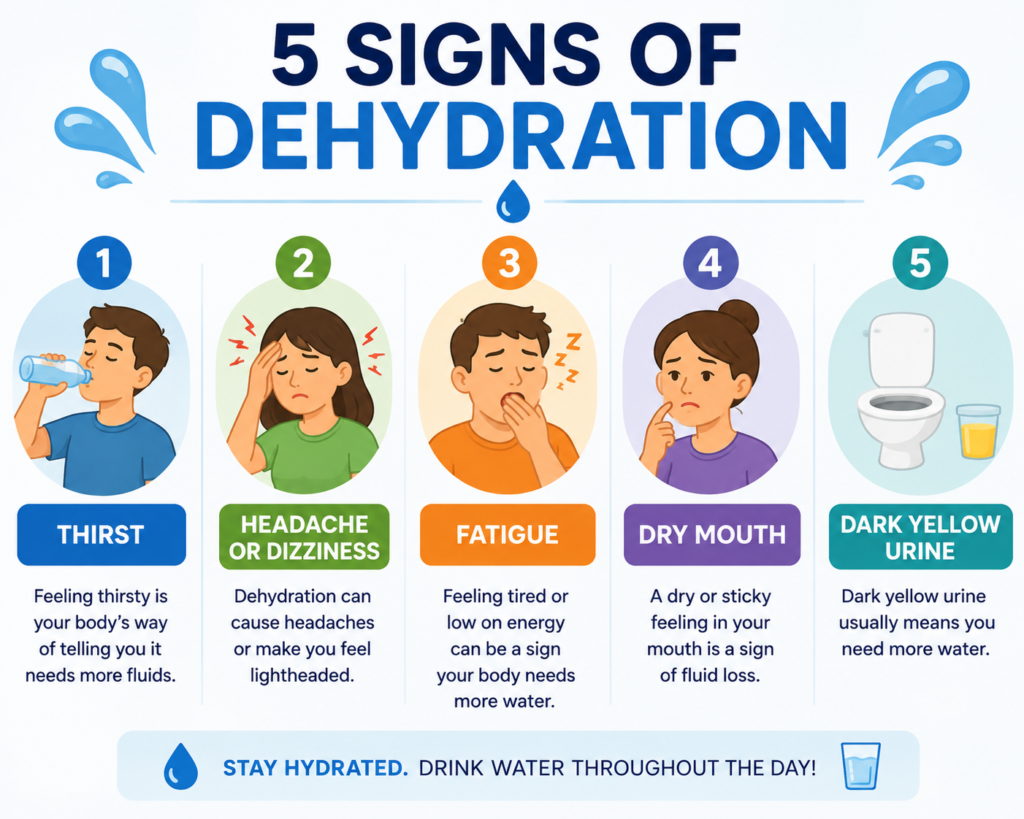
Here are 5 signs your body may be telling you it needs more water.
💧 1. You’re Very Thirsty
Thirst is one of the most obvious signs that your body needs fluids.
If you’re spending time outside, exercising, traveling, or dealing with an illness, don’t wait until you’re extremely thirsty before reaching for water.
Keep water nearby and take regular sips throughout the day.
🤕 2. You Have a Headache or Feel Dizzy
Dehydration can contribute to headaches and dizziness.
If you suddenly develop a headache or feel lightheaded—especially after being outside in the heat or exercising—consider whether you have had enough fluids.
Move to a cooler location, rest, and drink fluids.
If dizziness is severe, persistent, or accompanied by confusion or fainting, seek medical attention.
😴 3. You’re Unusually Tired
Feeling exhausted after a busy day doesn’t necessarily mean you’re dehydrated.
However, unusual fatigue or weakness can be a sign that your body needs more fluids.
This is especially important to recognize in children, older adults, athletes, and people spending significant time outdoors.
👄 4. You Have a Dry or Sticky Mouth
A dry mouth, sticky feeling in your mouth, or dry lips can be another warning sign.
If you’re experiencing these symptoms along with thirst, fatigue, or darker urine, it’s a good idea to increase your fluid intake.
🚽 5. Your Urine Is Dark Yellow
Your urine can provide a helpful clue about your hydration status.
Dark-colored urine and urinating less often than usual can occur with dehydration.
While urine color can vary for several reasons, consistently dark urine—especially when combined with thirst and other symptoms—may be a reason to drink more fluids.
☀️ Why Does Dehydration Happen?
Dehydration can happen for many reasons.
Common causes include:
- Not drinking enough fluids
- Sweating heavily
- Exercising in hot weather
- Spending extended time outdoors
- Fever
- Vomiting
- Diarrhea
- Certain medications or health conditions
Children can be particularly vulnerable to dehydration, especially when they have vomiting, diarrhea, or fever.
For additional information about the causes, symptoms, treatment, and prevention of dehydration, visit MedlinePlus’ Dehydration resource.
🥤 How Much Water Should You Drink?
There isn’t one amount of water that is right for everyone.
Your fluid needs can vary depending on your age, activity level, health, environment, diet, and how much you’re sweating.
Instead of waiting until you’re extremely thirsty, make hydration part of your daily routine.
Try:
- Carrying a reusable water bottle
- Drinking water throughout the day
- Drinking additional fluids when you’re exercising
- Increasing fluids during hot weather
- Replacing fluids lost through vomiting or diarrhea
- Drinking water before, during, and after outdoor activities
The CDC recommends regular fluid intake during hot conditions and notes that water is generally an appropriate choice for hydration.

🚩 When Is Dehydration an Emergency?
Mild dehydration can often improve with appropriate fluid intake and rest. However, severe dehydration can be serious.
Seek medical attention if dehydration is accompanied by:
- Confusion
- Fainting
- Very little or no urination
- Rapid heartbeat
- Rapid breathing
- Severe dizziness
- Inability to keep fluids down
- Significant weakness
Severe dehydration can be life-threatening and may require medical treatment.
If someone has signs of heat stroke, such as confusion, loss of consciousness, or severe overheating, seek emergency medical care immediately.
💻 How VUC Can Help
Dehydration can sometimes occur alongside other illnesses, including vomiting, diarrhea, fever, infections, or heat-related conditions.
VUC can help evaluate many common non-emergency health concerns and provide guidance on appropriate next steps.
Depending on your symptoms, a VUC provider can:
- Review your symptoms
- Discuss hydration and supportive care
- Evaluate common illnesses that may be contributing to dehydration
- Recommend appropriate treatment
- Provide preventative health information to help you stay healthy
At VUC, our goal isn’t just to help you feel better today. We also provide preventative health information so you can better understand your health and stay healthy.
Not sure whether VUC can help with your symptoms? Visit our What We Treat page to learn more about the common conditions we evaluate.
🌿 Simple Ways to Stay Hydrated
Make hydration easier by turning it into a habit.
Try these simple strategies:
- Keep water with you throughout the day.
- Drink before outdoor activities.
- Take regular water breaks.
- Add fruit to water if you prefer more flavor.
- Eat water-rich foods such as fruits and vegetables.
- Pay attention to signs that your body may need more fluids.
Remember, hydration is especially important during hot weather, exercise, travel, and illness.
The CDC also provides guidance on recognizing dehydration and staying hydrated during hot weather.
🩺 Preparing for a VUC Visit
If you’re feeling sick and think dehydration may be part of the problem, write down:
- When your symptoms began
- How much fluid you’ve been able to drink
- Whether you’ve been vomiting or having diarrhea
- How frequently you’re urinating
- Any fever or other symptoms
- Medications you’re currently taking
If you need virtual care, learn how to make your appointment easier with our How to Prepare for a Virtual Visit guide.
🌟 The Bottom Line
Your body needs water to function properly, and dehydration can sneak up on you—especially during hot weather, exercise, travel, or illness.
Pay attention to thirst, headaches or dizziness, unusual fatigue, dry mouth, and dark yellow urine. Recognizing these signs early can help you take steps to rehydrate before symptoms become more serious.
At VUC, we provide compassionate, preventative, and convenient virtual care when you need help with common non-emergency health concerns.
👉🏾 Feeling sick or concerned about dehydration? Schedule a virtual visit with VUC and get convenient care from home.