
A new itchy or unusual rash can be frustrating—especially when you’re not sure what’s causing it.
Some rashes are caused by allergies, irritation, heat, insects, or other skin conditions. Others are caused by fungi.
Fungal skin infections are common and can affect children and adults. One of the best-known examples is ringworm, which can cause an itchy, scaly, ring-shaped rash. Despite its name, ringworm isn’t caused by a worm—it’s a fungal infection. (CDC)
At Virtual Urgent Care (VUC), we help patients understand common skin concerns and provide convenient care when appropriate, along with preventative information to help you stay healthy.
🍄 What Is a Fungal Rash?
A fungal rash occurs when certain fungi grow on the skin.
Common fungal infections include:
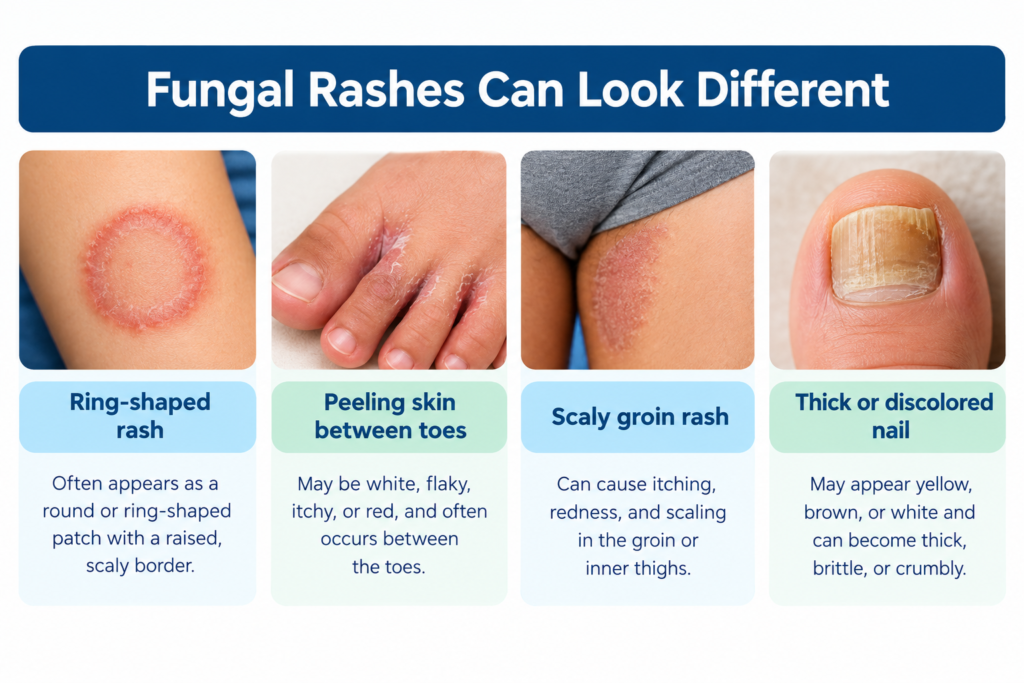
- Ringworm – often causes an itchy, scaly, ring-shaped rash
- Athlete’s foot – commonly affects the skin between the toes and feet
- Jock itch – affects the groin and inner thighs
- Scalp ringworm – can cause scaly areas and hair loss
- Fungal nail infections – can cause nails to become thick, discolored, or brittle (CDC)
Fungal infections can occur on different parts of the body and may look different depending on where they develop.
👀 What Does a Fungal Rash Look Like?
One common sign of ringworm on the skin is a round or ring-shaped patch with a raised, scaly border. The center may appear clearer than the outer edge, and the rash can become larger over time. (American Academy of Dermatology)
Other possible symptoms include:
- Itching
- Scaling or peeling
- Dry or cracked skin
- Red, brown, gray, or darker areas depending on skin tone
- Burning or irritation
- A rash that gradually spreads
Importantly, not every fungal infection has a classic ring-shaped appearance. Athlete’s foot, scalp infections, groin infections, and nail infections can look quite different. (CDC)
🌡️ Why Do Fungal Rashes Happen?
Fungi tend to thrive in warm, moist environments.
Your risk can increase with:
- Excessive sweating
- Hot and humid weather
- Damp clothing
- Tight shoes
- Shared locker rooms
- Walking barefoot in communal areas
- Contact with an infected person
- Contact with an infected pet
- Sharing towels, clothing, or other personal items (CDC)
This is one reason fungal skin infections can become particularly troublesome during warm-weather months.
🏊 Summer Activities Can Increase Your Risk
Swimming, sports, summer camps, gyms, and outdoor activities can create more opportunities for fungal infections to spread.
Help protect your skin by:
- Keeping your skin clean and dry
- Changing out of sweaty clothing
- Changing socks regularly
- Wearing sandals in public showers and locker rooms
- Avoiding shared towels and personal items
- Showering after sports or exercise
- Keeping athletic equipment clean (CDC)
For more information about preventing ringworm and other fungal infections, visit the CDC’s Ringworm Prevention resource.
🚫 Don’t Assume Every Rash Is Fungal
A rash can have many different causes.
Eczema, allergic reactions, contact dermatitis, insect bites, bacterial infections, and other skin conditions can sometimes look similar to a fungal rash.
That’s why it’s important to avoid automatically treating every itchy rash as a fungal infection.
The CDC notes that symptoms of ringworm can resemble other skin and nail conditions, and testing may sometimes be needed to confirm the diagnosis. (CDC)
⚠️ One Important Tip
Avoid using steroid creams on a rash that could be ringworm unless a healthcare professional specifically recommends them. The CDC warns that steroid creams can make ringworm worse. (CDC)

🩺 When Should You Get Care for a Fungal Rash?
Consider getting medical advice if:
- The rash is spreading
- The rash is painful
- The itching is severe
- The skin is cracking or bleeding
- There is drainage or pus
- The rash involves the scalp
- Hair loss develops around the affected area
- The rash involves the nails
- The rash isn’t improving with appropriate treatment
- You’re unsure what is causing the rash
Scalp fungal infections deserve particular attention because they can cause hair loss and often require prescription treatment. (CDC)
💊 How Are Fungal Rashes Treated?
Treatment depends on the location and severity of the infection.
Some fungal infections on the skin can be treated with over-the-counter antifungal medications, while other infections—particularly those involving the scalp or nails—may require prescription medication. (American Academy of Dermatology)
If an antifungal medication is recommended, use it exactly as directed and for the recommended length of time. Stopping treatment too early can allow the infection to return. (American Academy of Dermatology)
💻 How VUC Can Help
A new rash can be difficult to identify on your own.
Virtual Urgent Care (VUC) can provide convenient evaluation for many common, non-emergency skin concerns.
During a virtual visit, a VUC provider can:
- Review your symptoms
- Ask about when the rash started
- Discuss possible causes
- Review photos of the affected area when appropriate
- Recommend appropriate treatment
- Determine whether an in-person evaluation may be needed
- Provide prevention information to help reduce future skin problems
At VUC, our goal isn’t simply to help you get better. We also provide preventative health information so you can better understand your health and stay healthy.
Not sure whether VUC can help with your rash or other symptoms? Visit our What We Treat page to learn more about the common conditions we evaluate.
🧼 How to Prevent Fungal Rashes From Coming Back
Once you’ve had a fungal infection, prevention can help reduce the chance of getting another one.
Try to:
- Keep affected areas clean and dry
- Change socks and underwear daily
- Avoid sharing towels or clothing
- Wear breathable clothing
- Wear shower shoes in communal showers
- Wash your hands after touching an affected area
- Keep sports equipment clean
- Avoid close contact with someone who has an active fungal infection
- Have pets evaluated if they develop suspicious skin problems (CDC)
📝 Preparing for a VUC Visit
Before your virtual appointment, be prepared to tell your provider:
- When the rash began
- Where it first appeared
- Whether it has spread
- Whether it itches, burns, or hurts
- Any recent swimming, sports, gym, or outdoor activities
- Whether you’ve tried any creams or medications
- Whether anyone else in your household has a similar rash
Showing affected area in good lighting may also help your provider understand what you’re experiencing.
Want to make your virtual visit easier? Read our How to Prepare for a Virtual Visit guide before your appointment.
🌟 The Bottom Line
Fungal rashes are common, but they can sometimes look similar to other skin conditions.
Pay attention to itching, scaling, peeling, ring-shaped patches, spreading rashes, or changes to the nails or scalp. Early evaluation can help you determine what may be causing the rash and what treatment is appropriate.
At VUC, we provide compassionate, preventative, and convenient virtual care for many common health concerns—without the waiting room.
And because we believe prevention is part of good healthcare, we’ll also provide information to help you understand how to protect your skin and reduce your risk of future problems.
👉 Have a new or bothersome rash? Schedule a VUC virtual visit and get convenient care from home.