Back-to-school season brings new teachers, new routines, and plenty of opportunities for children to learn and make friends. Unfortunately, it can also bring something parents would rather avoid: stomach bugs.
When children spend more time together in classrooms, cafeterias, playgrounds, and after-school activities, germs can spread more easily.
Stomach bugs can cause sudden vomiting, diarrhea, stomach cramps, nausea, and sometimes fever. Most children recover with rest and supportive care, but parents should know what symptoms to watch for—and especially how to recognize dehydration.
At Virtual Urgent Care (VUC), we provide convenient care for many common illnesses while also providing preventative health information to help families stay healthy throughout the school year.
🤢 What Is a Stomach Bug?
A “stomach bug” is a common term for viral gastroenteritis, an infection that affects the stomach and intestines.
Viruses such as norovirus are common causes of viral gastroenteritis and can spread easily from person to person.
Stomach bugs can spread through:
- Close contact with someone who is sick
- Contaminated hands
- Contaminated surfaces
- Sharing food or drinks
- Improper handwashing
Children can be particularly susceptible because they spend much of their day in close contact with other children.
🚩 Common Symptoms of a Stomach Bug
Symptoms can vary from child to child, but common symptoms include:
- Nausea
- Vomiting
- Diarrhea
- Stomach cramps or abdominal discomfort
- Loss of appetite
- Fatigue
- Mild fever
Symptoms may appear suddenly, which can make a child go from feeling fine at school to feeling very sick within a short period.
💧 The Biggest Concern: Dehydration
For children with vomiting or diarrhea, dehydration is one of the biggest concerns.
When a child loses more fluid than they are able to replace, dehydration can develop.
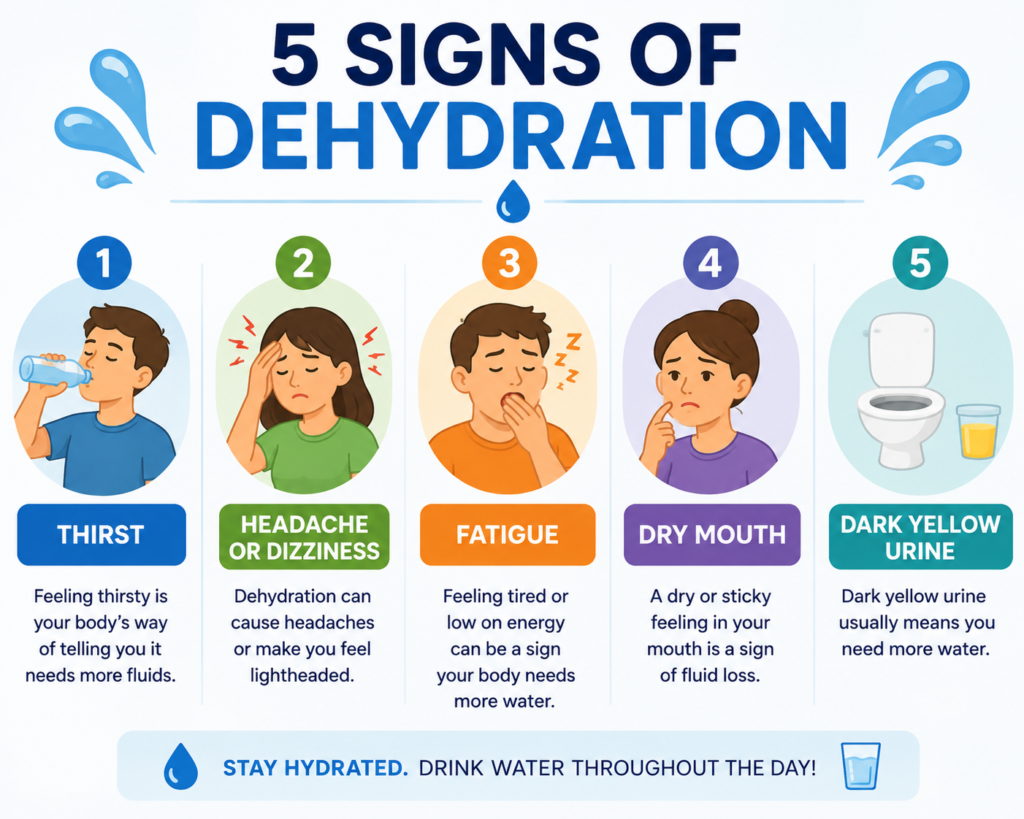
Signs of dehydration may include:
- Dry mouth or lips
- Fewer tears when crying
- Dark yellow urine
- Urinating less frequently
- Unusual tiredness
- Dizziness or weakness
- Increased thirst
Young children may not always be able to tell you that they are becoming dehydrated, so parents should pay close attention to changes in behavior, urination, and energy level.
🥤 How Can Parents Help a Child With a Stomach Bug?
If your child is able to drink, encourage small, frequent amounts of fluid rather than large amounts at once.
Depending on your child’s situation, options may include:
- Water
- Oral rehydration solutions
- Broth
- Other appropriate fluids
If vomiting is occurring, small sips given frequently may be easier to tolerate than drinking a large amount at once.
Once your child’s appetite returns, gradually return to their normal diet as tolerated.
🧼 How to Prevent Stomach Bugs From Spreading
Stomach bugs can spread quickly, but good hygiene can help reduce transmission.
Teach children to:
- Wash their hands thoroughly with soap and water
- Wash hands after using the bathroom
- Wash hands before eating
- Avoid sharing food, drinks, or utensils
- Avoid touching their mouth with unwashed hands
- Stay home when sick
- Avoid close contact with others while experiencing symptoms
Cleaning frequently touched surfaces at home can also help reduce the spread of illness.
For more information about preventing and managing norovirus and other common stomach illnesses, visit the CDC’s Norovirus resource.
🏫 When Can Your Child Return to School?
Follow your child’s school or childcare policy regarding when children can return after vomiting, diarrhea, or fever.
As a general precaution, children who are actively vomiting or experiencing diarrhea should stay home rather than returning to school and potentially spreading illness to classmates.
Your child’s healthcare provider can also help you determine when it is appropriate to return to normal activities based on the illness and your child’s symptoms.
🩺 When Should Parents Seek Medical Care?
Most stomach bugs improve with time, fluids, and supportive care. However, some symptoms warrant in-person medical attention.
Contact a healthcare provider if your child:
- Cannot keep fluids down
- Has signs of dehydration
- Has persistent or worsening symptoms
- Has significant or severe abdominal pain
- Has blood in the stool or vomit
- Has a high or persistent fever
- Is unusually sleepy, weak, or difficult to wake
- Is urinating much less than usual
Seek emergency medical care if your child has severe difficulty breathing, becomes difficult to wake, has a significant change in alertness, faints, or appears seriously ill.
💻 How VUC Can Help
When your child is sick, the last thing parents may want to do is pack everyone into the car and sit in a crowded waiting room.
Virtual Urgent Care (VUC) provides convenient virtual visits for many common, non-emergency health concerns.
Depending on your child’s symptoms, a VUC provider can:
- Review symptoms
- Discuss hydration and supportive care
- Help determine whether medical evaluation is appropriate
- Recommend treatment when appropriate
- Help identify warning signs that require in-person care
- Provide preventative health information
At VUC, we don’t just want to help your family get better. We want to provide the information you need to stay healthier and make informed decisions about your family’s health.
Not sure whether VUC can help with your child’s symptoms? Visit our What We Treat page to learn more about the common conditions we evaluate.
🎒 Preparing for a Sick Day
It can help to have a few basic supplies ready before your child gets sick.
Consider keeping:
- A thermometer
- Water or appropriate hydration fluids
- Tissues
- Basic first-aid supplies
- Your child’s medication information
- Your preferred pharmacy information
Having these items available can make an unexpected sick day a little easier.
If your child needs a virtual visit, our How to Prepare for a Virtual Visit guide can help you know what information to have ready before the appointment.
🌟 The Bottom Line
Back-to-school stomach bugs can spread quickly, but knowing what to watch for can help parents respond early.
Focus on hydration, handwashing, rest, and monitoring symptoms. Most importantly, watch for signs of dehydration and symptoms that are severe, persistent, or worsening.
When your child needs convenient care, VUC provides compassionate, preventative, and convenient virtual urgent care from the comfort of home.
And because we believe prevention matters, we also provide preventative health information to help your family stay healthy—not just treat illness when it happens.
👉 Is your child feeling sick? Schedule a virtual visit with VUC and get convenient care from home.