
A sore throat can make even the busiest day feel harder. Whether you’re trying to get through work, take care of your family, or simply get some much-needed rest, throat pain can make swallowing, talking, and eating uncomfortable.
The good news? Most sore throats are caused by viruses and improve on their own within about a week. However, a sore throat can sometimes be caused by strep throat or another condition that requires medical attention.
Understanding the possible causes can help you know when home care may be enough—and when it’s time to get evaluated.
🤒 What Causes a Sore Throat?
A sore throat, also called pharyngitis, is irritation or inflammation in the throat.
Common causes include:
- Common cold viruses
- Influenza (flu)
- Other viral infections
- Strep throat
- Allergies
- Tonsillitis
- Postnasal drainage
- Smoke or other irritants
According to the CDC, viruses that cause colds and flu are the most common causes of sore throat. Most sore throats get better on their own within about a week.
🔍 Common Sore Throat Symptoms
A sore throat may feel:
- Scratchy
- Dry
- Burning
- Irritated
- Painful when swallowing or talking
You may also experience:
- Fever
- Cough
- Runny or stuffy nose
- Hoarse voice
- Swollen or tender lymph nodes
- Headache
- Body aches
- Red or swollen tonsils
The symptoms can vary depending on what’s causing your sore throat. For additional information about common causes, symptoms, diagnosis, and treatment, see MedlinePlus’ patient information on sore throat and pharyngitis.
🦠 Is It a Cold or Strep Throat?
One of the most common questions people have is:
“Do I have a cold—or is this strep?”
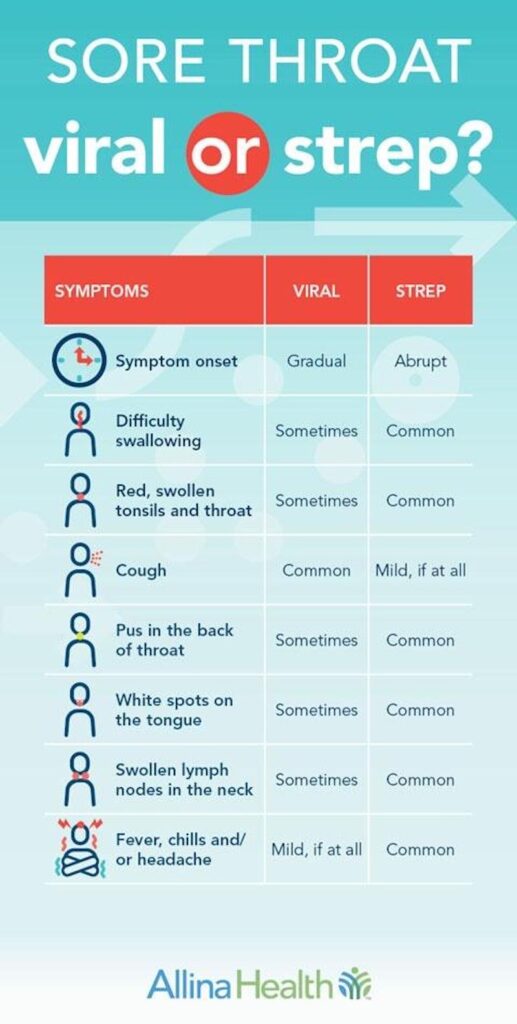
Symptoms that can occur with a viral sore throat
A cough, runny nose, hoarse voice, or pink eye can suggest that a virus may be responsible rather than strep throat.
Viruses are the most common cause of sore throat.
Symptoms that can occur with strep throat
Strep throat is caused by group A Streptococcus bacteria.
Symptoms may include:
- Sore throat that begins quickly
- Pain when swallowing
- Fever
- Red and swollen tonsils
- Swollen lymph nodes in the front of the neck
- White patches or streaks on the tonsils
- Tiny red spots on the roof of the mouth
Children may also experience headache, nausea, vomiting, stomach pain, or a rash.
The CDC notes that strep throat is more common in children than adults, particularly children ages 5 through 15.
💊 Do You Need Antibiotics for a Sore Throat?
Not usually.
Antibiotics treat bacterial infections—not viral infections. Since most sore throats are caused by viruses, antibiotics won’t help most people with a sore throat.
Taking antibiotics when they’re not needed can also cause side effects and contribute to antibiotic resistance.
The bottom line: Don’t assume every sore throat needs an antibiotic.
The goal is to determine what’s causing the symptoms and choose treatment based on the cause.
CDC – Clinical Guidance for Group A Streptococcal Pharyngitis
🍵 5 Ways to Soothe a Sore Throat at Home
If your symptoms are mild and you don’t have warning signs, several simple measures may help you feel more comfortable.
1. Stay Hydrated
Drink plenty of fluids throughout the day. Warm beverages, broth, and cool drinks can all be soothing depending on what feels best to you.
2. Try Warm Saltwater Gargles
For older children and adults who can gargle safely, warm saltwater may help soothe throat irritation.
3. Try Ice Chips or Popsicles
Cold foods and drinks can temporarily soothe an irritated throat.
4. Rest
If you’re feeling sick, give your body time to recover. Rest can be especially important when a sore throat is part of a larger viral illness.
5. Consider Appropriate Over-the-Counter Pain Relief
Acetaminophen or ibuprofen may help reduce pain or fever when appropriate for your age and health circumstances.
Always follow the medication label and ask a healthcare professional if you’re unsure which medication or dose is appropriate.
For children: Never give aspirin to children because of the risk of Reye’s syndrome.
The CDC also recommends measures such as drinking plenty of fluids, gargling with salt water, using ice chips or popsicles, and using a clean humidifier or cool-mist vaporizer to help relieve symptoms.
🧼 Can You Prevent a Sore Throat?
You can’t prevent every sore throat, but you can reduce your exposure to many of the germs that cause respiratory illnesses.
Try these simple habits:
- Wash your hands regularly.
- Avoid sharing cups, utensils, or drinks with someone who is sick.
- Cover coughs and sneezes.
- Avoid touching your eyes, nose, and mouth with unwashed hands.
- Stay hydrated.
- Get adequate sleep.
- Stay home when you’re sick when possible.
- Avoid exposure to cigarette smoke and secondhand smoke.
These habits can be especially helpful for families with school-aged children or people who seem to get sick repeatedly.
The CDC also recommends good hand and respiratory hygiene to help reduce the spread of group A strep bacteria.
🚨 When Should You Get Medical Care for a Sore Throat?
Most sore throats aren’t serious, but some symptoms should not be ignored.
Contact a healthcare professional if you have:
- A sore throat that is getting worse or isn’t improving
- Significant fever
- Swollen lymph nodes
- A rash
- White patches or pus on the tonsils
- Recurrent sore throats
- Difficulty swallowing
- Signs of dehydration
- Concern that you may have strep throat
Seek in-person medical attention for:
- Difficulty breathing
- Severe difficulty swallowing
- Excessive drooling, particularly in young children
- Blood in saliva or phlegm
- Significant dehydration
- Severe or rapidly worsening symptoms
The CDC specifically recommends medical evaluation for difficulty breathing or swallowing, dehydration, rash, excessive drooling in young children, and symptoms that don’t improve or become worse.
For infants younger than 3 months, a fever of 100.4°F (38°C) or higher warrants prompt in-person medical attention.
💻 Can Virtual Urgent Care Help With a Sore Throat?
When your throat starts hurting after the doctor’s office closes—or when you’re simply too busy to spend hours in a waiting room—Virtual Urgent Care may be a convenient option for evaluation.
During a virtual visit, a healthcare professional can:
- Review your symptoms and how long you’ve been sick
- Ask about fever, cough, congestion, swallowing, and other symptoms
- Discuss whether your symptoms may be more consistent with a viral illness or another condition
- Review appropriate symptom-relief options
- Determine whether additional in-person evaluation or testing may be needed
- Provide guidance about what symptoms to watch for as you recover
For many common urgent-care concerns, virtual care can provide convenient access to medical guidance from home.
Not sure whether your symptoms are appropriate for virtual care? Explore the common conditions Virtual Urgent Care can help evaluate through our What We Treat page.

🩺 How to Prepare for a Virtual Visit for a Sore Throat
Before your appointment, it can help to have a few details ready:
- When your sore throat started
- Whether symptoms are getting better or worse
- Your temperature, if you’ve checked it
- Other symptoms such as cough, congestion, headache, or rash
- Current medications
- Medication allergies
- Recent exposure to someone with strep or another illness
- Any home treatments you’ve already tried
Want to make your virtual visit as productive as possible? Learn what to have ready before your appointment in our How to Prepare for a Virtual Visit guide.
👨👩👧👦 A Note for Busy Families
Sore throats have a way of showing up at inconvenient times—before school, after work, during the weekend, or right when your family schedule is already packed.
Instead of trying to figure everything out on your own, getting clear medical guidance can help you understand what you can safely manage at home, what symptoms to watch for, and when additional care may be needed.
That’s the goal of preventative healthcare: not simply helping you feel better today, but giving you information that can help you make healthier decisions moving forward.
💙 How Virtual Urgent Care Can Help
At Virtual Urgent Care (VUC), we believe healthcare should be compassionate, preventative, and convenient.
For many common urgent-care concerns, VUC provides:
- Flat-fee virtual visits
- No insurance required
- Same-day appointments when available
- No waiting rooms
- No commute
- Clear communication and detailed discharge instructions
- Post-visit check-ins
- Preventative health information to help you stay healthier
- Convenient access to visit information through the patient portal
VUC serves patients in Georgia, Florida, California, Texas, Minnesota, Michigan, Illinois, Indiana, Ohio, and Wisconsin.
If you’re dealing with a sore throat and aren’t sure what to do next, don’t spend your day wondering whether you need care. Get clear guidance from the comfort of home.
📲 Book Your VUC Virtual Visit
Virtual Urgent Care is here to help you navigate common illnesses with compassionate, preventative, and convenient care.
Book your VUC virtual visit today at myvirtualurgentcare.net.
🌿 The Bottom Line
A sore throat is common—and most of the time, it’s caused by a virus and gets better with supportive care.
But a sore throat can sometimes be caused by strep throat or another condition that requires medical attention.
Knowing the possible causes, recognizing warning signs, staying hydrated, and getting evaluated when appropriate can help you recover safely.
And remember: you don’t have to wait until you’re seriously sick to seek guidance.
Your health matters. Your time matters. And you deserve healthcare that treats you like a person—not just a number.